Youth Soccer Coaches: Does Competition Between Teammates Help or Hurt?
Competition between teammates in youth sports helps when the stakes are small, the scoring is visible, and the contest rewards effort a kid controls. It hurts when kids get ranked on things they can't change. In late September 2026, two of my players showed me the good version.
I'm Matt McWilliams, head coach of an 11U team and co-founder of Train Daily, so I have a stake in leaderboards. Weigh that as you read. The example below is one exchange between two kids, not research.
What happened when two of my players competed on a leaderboard?
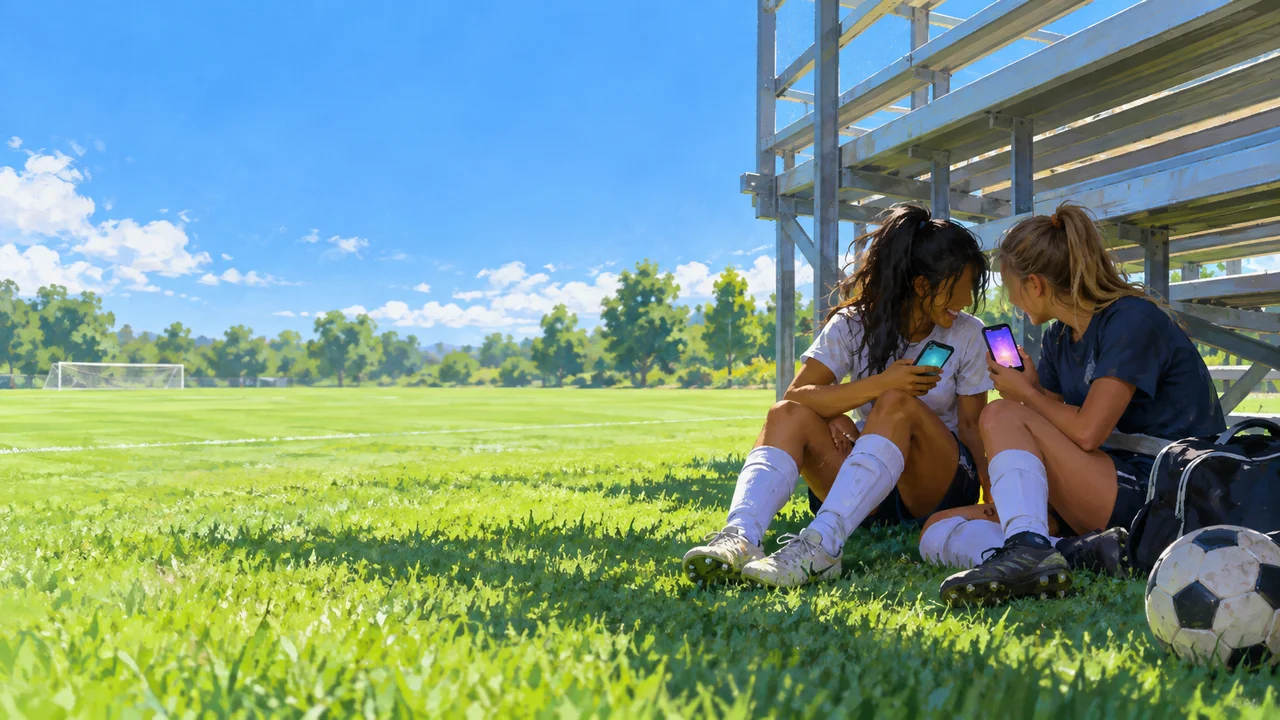
They both earned more points, and I did nothing. In late September 2026, one of my players passed a teammate on our team-only Train Daily leaderboard and gave him a hard time about it at Thursday practice. The teammate passed him back that weekend.
Points come from completing the day's work, so passing a teammate means doing more of it. Both players earned more points in the days after the exchange. The leaderboard is team-only, so the contest stayed between kids who already know each other.
I stayed out of it. That is a single exchange between two kids, and it went well.
Staying out was a choice. My job is to design the environment and get out of the way. A Bodo/Glimt coach put it this way: if the drill's design is good, the more silent you are, the better the drill.
When does competition between teammates help?
It helps when something small is on the line. A Bodo/Glimt coach once put a case of Coke in the middle of the field and let the winning team take it home. The intensity of that session came from the stakes, not from the drill design.
I don't need soda. Winners stay on, and losers do the kickoff.
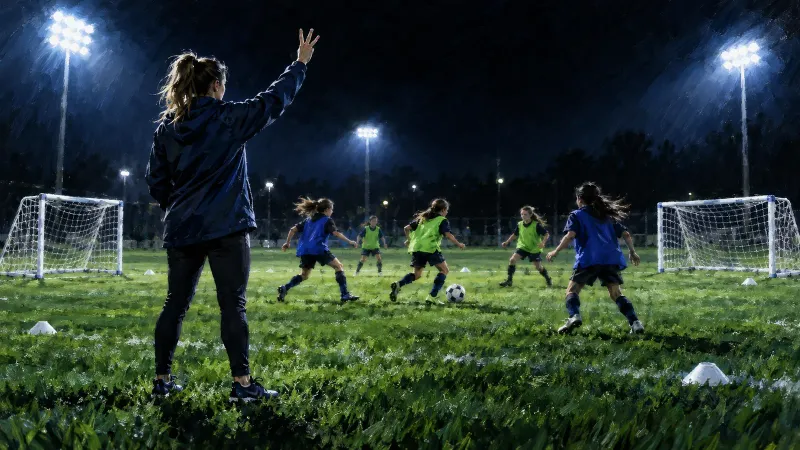
Once a week I run a practice built around a running score. I call it Competition Night, and the best one so far was September 3, 2026. Engagement ran near 100% for two hours, every player logged over a thousand touches, and the kids were exhausted at the end. I credit the format, not the drills.
What makes a competitive practice format work?
Five rules produced that night, and any exercise can drop into them:
- Teams get set at the start and stay locked for the whole session.
- Every block scores into one running total, so no block is uncompetitive.
- The full point structure gets announced before the warm-up ends.
- The final game counts three times as much as an earlier block, so a lead can't end the night.
- An assistant keeps the scoreboard and calls it out loud while I watch.
The scoreboard replaces my instructions as the source of intensity. Players organize toward the behavior the points pay for. I run it once a week and skip it in the final week before the state tournament.
The same logic works between practices. Train Daily for coaches gives your team a team-only leaderboard, streaks, and challenge days with bonus points, so the competition continues on the days you don't meet.
What does low-pressure competition look like?
It looks like a game with a silly twist. Fun gets designed on purpose in my program, with specific constraints that spark competition.
Celebration Day means goals don't count unless everyone touches the scorer. Pro Jersey Day has players wear a jersey they love. I've also thrown a size one ball into a scrimmage and put a yoga ball on the field.
I announce each one at the end of the prior week's last practice, so players have something to look forward to. None of them rank a kid against a teammate, and each one gives the team a shared target.
When does competition between teammates hurt?
It hurts when kids compete on things they can't control, or when the loser takes the hit in front of the group. At ages 9 to 11 the prefrontal cortex is still developing, so a kid who comes off the field in tears after a loss is dealing with a hardware limit.
I use a two-minute rule for those moments. Give the kid space, hand over water, sit nearby, and wait. Then approach. Approaching at ten seconds feels like coaching to you and sounds like noise to the kid.
Mistakes are welcome on my team. I don't correct during live play, and I never give feedback in front of the group. A competition that makes a mistake expensive in public teaches kids to play it safe.
When one side keeps winning, change the conditions. If a game ends with the same team ahead every time, the exercise has stopped teaching anyone. Adjust the field size, the numbers, or the scoring before you coach the losing side harder.
What about competition for playing time?
Set the rule early and say it out loud. On my team, playing time is equal over the season, not per game, and no player plays fewer than half a game. In a close game the last 7 to 10 minutes may favor stronger players, and I balance any shortfall in the games that follow.
Tournaments change the rule. Winning matters there, so the equal-minutes rule comes off, with a floor of 30 minutes for every healthy player. Tell players the minutes rule before the tournament starts, because a surprise changes how kids read their time on the field.
Tryout numbers don't close the door on my team. One player on my roster missed tryouts for church camp and a family vacation, got added after an in-practice evaluation, and became one of our top scorers. Every kid plays most positions over a season, and the best position reads of the year came from that rotation: a forward moved to left back on September 10 and shut down the opponent's best attacker. Tryout numbers were a starting point, not a verdict.
How do you keep a weaker player in the contest?
Give each player a job they control, and judge the intention. A winger gets to the byline and tries the cross, and the ball sails over the net. That's a win, because the winger did the job, and now there's something concrete to work on. A game you lost still has several wins inside it.
Locked teams and the weighted final game help too. Both keep the score close enough that the trailing team stays involved. A leaderboard that scores completed work gives every player a path to climb, because effort moves the number. A player who sits at the bottom in week one can pass a teammate in week two by finishing more reps.
What do I still not know about this?
I have one clean example, and I haven't tested how a leaderboard works on a roster where one kid sits far behind. A kid who falls behind on a leaderboard may tune it out, and I can't tell you how often that happens. Watch the kid at the bottom of your board as closely as the two at the top.
What do you do when trash talk turns unkind?
Step in privately, and use your normal feedback steps. My feedback model has four: make contact, acknowledge what the player tried, ask if the player wants feedback, then give it. Do it on the sideline or one-on-one, not in front of the team.
The exchange above didn't need that. Watch the tone, and if one player's comments stop sounding like a game between friends, talk to that player alone. Name what you heard, ask what the player meant, and agree on how the comments will sound from here.
The same scoreboard logic applies to home practice. How youth soccer coaches can get players to practice on off days covers the assignments I give and how I make completion visible to the team.
What to do this week
- Pick one small stake, such as winners stay on or losers do the kickoff.
- Announce the point structure before the session starts, and weight the final game.
- Judge players on the job you gave them, and talk to any player who gets unkind privately.
Frequently asked questions
Is competition between teammates good for kids?
It can be. In my practices it works when the stakes are small, the scoring is visible, and kids compete on effort they control. It hurts when the loser gets embarrassed in front of the group. My example is one team of 9-to-11-year-olds, not research.
Should coaches use leaderboards for youth players?
I do, and I co-founded the app, so weigh my view accordingly. Keep the board team-only, score completed work so effort moves the number, and watch how players talk to each other. Step in privately if comments turn unkind. Watch the player at the bottom of the board as closely as the leaders.
Is trash talk between teammates okay?
In the exchange I described, two players gave each other a hard time over leaderboard points and both earned more the following days. Watch the tone. If comments stop sounding like a game between friends, talk to the player alone, not in front of the team.
How do you stop competition from splitting a team into winners and losers?
Lock teams for the session, score every block into one running total, and weight the final game three to one so a lead can't end the night. Judge players on the job you gave them, and celebrate intention as well as outcome.
How often should you run competitive practices?
I run one Competition Night a week and skip it during the final week before the state tournament. The rest of the week, I use small stakes inside regular sessions, such as winners stay on and losers do the kickoff.