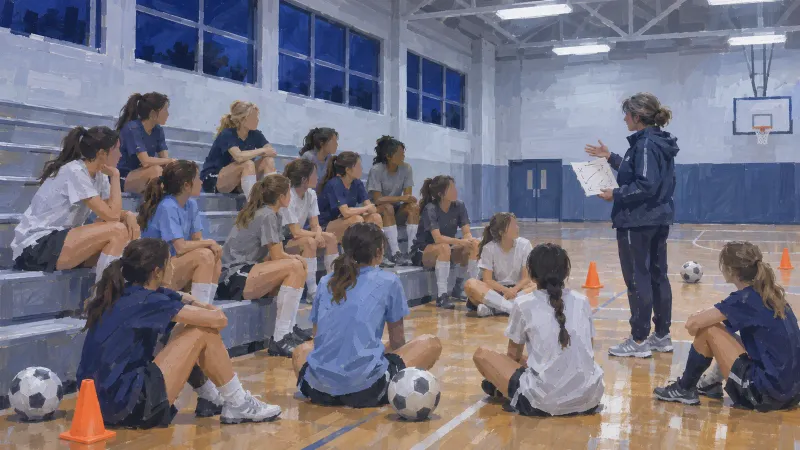
Homeschool Soccer Coaches: How to Coach a Homeschool Team
Coaching a homeschool soccer team means building the structure a school's athletic department would normally supply. You plan around a short tryout window, a practice week that games can interrupt, and opponents who change the format on you. I coach in a large homeschool program, so those are the situations I know best.
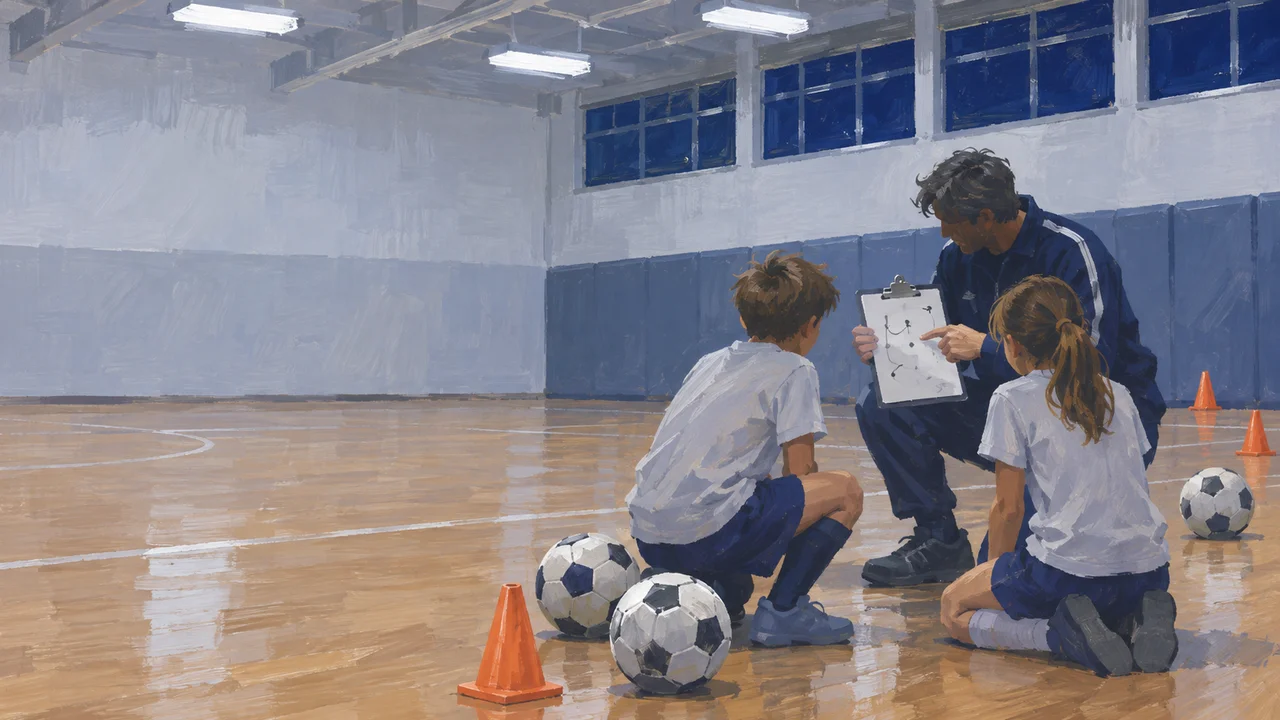
I co-founded Train Daily and coach a homeschool soccer team in Fort Wayne, IN. My team is coed, plays 9v9, and has 12 players between 9 and 11 years old. This fall we finished 15-1 through October 10, 2026, and won our state tournament, and I wrote up the details in a separate post on how we won the state title. My program has no athletic director, and that shapes how I plan.
What's different about coaching a homeschool soccer team?
The coach carries more of the setup. A homeschool team has no school behind it, so there's no athletic director to ask, and my league offers no scouting on opponents. I plan each week knowing that.
Size changes the picture too. My program has grown over the past 15 to 20 years into the largest homeschool soccer club in my state and one of the largest in the country. I credit two things. Indiana is friendly toward homeschooling, and the program's reputation draws players from as far as an hour away. A smaller program in another state will run differently, so treat my numbers as one example.
What should you ask your league before the first practice?
Get five answers before you plan anything, because the rest of your season rests on them.
- How do teams qualify for the state tournament, if your league has one?
- Which formats and ball sizes does the league use at your age group, and who confirms them before games?
- Are there out-of-season contact rules?
- What age range can one roster carry?
- Who answers your questions when a rule is unclear?
I can't answer those for you, and your league's answers may differ from my program's.
How do you run tryouts for a homeschool soccer team?
Decide your roster fast enough that the team can practice together before the first game. Day one of my tryouts is pure evaluation with 1v1s through 5v5s, a rondo, goalkeeper evaluations, and one large-sided game. By the end of that day I have 16 to 18 players in the mix for 12 roster spots, including two goalkeepers, and I'm sure about 6 to 8 of them. I set the full roster by the end of day four, and the last two days of the two-week window are regular practice.
About 38 to 40 players typically try out for 12 or 13 spots on my team. My program doesn't cut players, so those who don't make my team go to one of its other teams.
After tryouts I get three to five practices before the first game. I like to schedule one early game if I can, followed by a full week of practice, because players want to play and I let them.
What does a homeschool soccer practice week look like?
Mine has three practices, plus a weekday game and a weekend game most weeks. Some weeks a game lands on a practice day. My sessions run two hours, and the first 23 to 25 minutes are a shared warm-up. Zach and Shelly Netherton, my program's coordinators, run that warm-up for all three of our 11U teams together, about 40 players.
A week with games mixed in changes what each practice is for. I put new teaching on the night nearly the whole roster attends, and the other nights carry review. If a game takes one of your nights, the same logic applies. Decide which of the remaining sessions carries the new material.
If some of your players can't make every session, plan the week around who is in the room. My post on planning practices when players miss days covers which night I use for new teaching and which nights carry review.
Are there out-of-season rules for homeschool soccer teams?
My program has no out-of-season contact rules. That describes my program, and your league may differ. Rules vary by league, homeschool association, and state, so ask yours before you plan anything between seasons. None of this is legal or regulatory advice.
With no dead period, I run a weekly futsal practice through the winter for my team and any other player who wants to join. I laid out that plan, along with the rest of our off-season, in a post for parents about winter break. If your league does set limits, how I handle at-home work for school teams with short seasons starts with the questions to ask before you assign anything.
How do you game plan when there's no scouting and the format keeps changing?
Teach principles that work against any opponent, and confirm the format two days before each game. This season opponents moved us off 9v9 more than once. One of those games was 11v11 on a field only 10 to 20% bigger than our 9v9 field, and a size 5 ball showed up that we hadn't planned for. I underestimated how often that would happen.
When the format can change on game day, a short checklist saves you the scramble. My post on game planning without scouting covers the four questions I now email the other coach two days ahead and how I treat the first ten minutes of a game as the scouting report.
How do you coach a mixed-age, coed roster?
Build practices that let each player find a challenge level. My roster is roughly eight boys and four girls, ages 9 to 11, and the size range between my smallest and largest players is wide. I keep at least 85% of session time in game environments where attack, defense, and transition all show up, and each activity has an easier, a standard, and a harder version. That lets a 9-year-old and an 11-year-old work in the same game at different levels. I wrote out the full shape in how I plan a practice around Play-Practice-Play.
I haven't built a progression for teaching contact to a coed roster with that range of sizes, and it's still an open problem for me. Playing time is simpler to settle. Mine runs equal over the season with a floor of half a game, and no player plays more than two positions in a game.
How do you set expectations with parents?
Say your priorities at a parent meeting before the first game. This season I told parents I cared more about development, tough competition, and playing the game the right way than about wins, even if that meant scoring less or conceding more. I also ask for one thing from the sideline, and it's short. Cheer, don't coach. "Let's go!" works. "KICK IT!" undoes a month of work.
How do you keep attendance steady?
Use the RSVP tool your team already has, and let it decide when you reach out. My team uses a shared-calendar app that asks parents to RSVP for games and practices, and most parents do. If a parent forgets to RSVP and the player misses a practice, I usually do nothing. If a parent RSVPs yes and the player doesn't show, I send a quick private message asking if everything's okay.
The message does two jobs. It shows the family I care, because I do. It also tells me whether that player will probably miss the next practice too, from an injury or an illness, so I can plan around it. That one message has been enough so far. No family has RSVP'd yes and then missed more than one practice in a row.
How do you keep players touching the ball between practices?
With three practices and a game or two each week, the days without either still matter. My team plan is 15 to 30 minutes of ball mastery on days we don't practice, with the planning assumption that 75% of players do 75% of it. Each assignment has a skill, a count, and a time limit, such as 50 inside-foot passes with your left foot against a wall in 10 minutes. All players get the same work for the first two weeks so the habit forms before anything gets personalized. I covered the full plan in how I get players to practice on off days.
Off-day work does more when you can see who did it. Train Daily lets you assign a drill from a video library in about two minutes, add a reinforcement question, and watch completions on a team-only leaderboard. It's free for coaches, with every feature included.
Any app that collects player information needs verifiable parental consent for players under 13. I wrote up the rules and questions to check before you use a training app, and your league can tell you what it requires.
What to do this week
- Send your league the five questions above and write down the answers.
- Pick the practice night nearly your whole roster attends, and use it for new teaching.
- Choose one RSVP tool and one rule for when you message a family.
Frequently asked questions
How many practices a week should a homeschool soccer team have?
I can't give you a number that fits every league. My team has three practices a week, plus a weekday game and a weekend game most weeks, and some weeks a game lands on a practice day. Ask your league whether it limits practice time, then plan around the sessions you reliably get.
Do homeschool soccer teams have an athletic director?
Mine doesn't. Without one, I confirm formats and ball sizes with the opposing coach two days before each game. Your program may be set up differently, so ask who handles scheduling, fields, and referees before the season starts, and write down the answer.
How do you run tryouts for a homeschool soccer team?
Spend day one on pure evaluation with 1v1s through 5v5s, a rondo, goalkeeper work, and a large-sided game. Mine narrows 16 to 18 players to a roster of 12 by day four, and the last two days of the window are real practice. Schedule one early game if you can.
Are there out-of-season contact rules for homeschool soccer?
My program has none, but rules vary by league, homeschool association, and state. Check with your league and homeschool association first, and your state association if your team plays in a state tournament. Get the answer before you assign or run anything between seasons. This is not legal or regulatory advice.
What should you do when an opponent changes the format?
Email the other coach two days before the game and ask how many players they'll field, which format they're playing, what ball size the game uses, and what the field dimensions are. Bring a spare ball in each size your league might use, so a ball problem gets solved in the parking lot.