Train Daily vs. Private Soccer Training: What Each Gives Your Kid
Private soccer training runs $40 to $100 an hour. Train Daily runs about $12 to $25 a month. What matters more than that price gap is what each one buys your kid: a trained pair of eyes on a bad habit once a week, or a few minutes of guided reps every single day. Here's how the two stack up, including Train Daily's current pricing and the specific thing a private coach still does that an app can't touch.

I co-founded Train Daily and coach in Fort Wayne, IN. I have an obvious stake in this comparison, so weigh that as you read. But I'm not going to pretend a two-minute daily app replaces a coach standing next to your kid, watching their plant foot, and fixing it on the spot. It doesn't. It also costs a fraction of what that coach charges, and most families can't afford enough private sessions to build the kind of daily habit a cheap app builds for free during the trial. Here's where each one wins.
How much does private soccer training cost compared to an app?
A private one-on-one soccer lesson runs $40 to $100 for a one-hour session, according to Lessons.com's cost breakdown, checked October 8, 2026. Group lessons with two to five players run $35 to $65 per kid. Package deals of 6, 12, or 18 lessons typically knock 15% to 25% off the per-session rate, which is the main way families make private training affordable over a season instead of a single splurge.
Train Daily's pricing, current as of October 8, 2026, runs $12.42 a month or $149 billed annually for the One Player plan. The Family plan covers up to eight kids under one bill for $24.92 a month or $299 a year, with each kid still getting their own daily reps and their own group on the leaderboard. Both plans include a 30-day free trial with a card on file; you're not charged until day 30, and Train Daily emails you three days before that happens.
A quick note on these numbers. The private-lesson range comes from a national lessons marketplace, not from calling every coach in your specific city, and Train Daily's figures come straight from its own pricing page as of the date above. Both change, so confirm current numbers before you commit to either one.
| What you're comparing | Private soccer lessons | Train Daily, One Player | Train Daily, Family (up to 8 kids) |
|---|---|---|---|
| Typical cost | $40 to $100 per one-hour session | $12.42/month or $149/year | $24.92/month or $299/year |
| Who's coaching | One coach, one kid, live and in person | Self-guided daily reps, no coach present | Self-guided daily reps, no coach present |
| Typical frequency | Once a week or less, often in short bursts | A few minutes a day | A few minutes a day, per kid |
| Free trial | Rare, sometimes a discounted first visit | 30 days, cancel before day 30 | 30 days, cancel before day 30 |
Run the math on a common setup. One private lesson a week at $70, the midpoint of that $40 to $100 range, comes out to roughly $300 a month if you kept it up every week, which most families don't. They book a handful of sessions around a specific problem instead. Train Daily's family plan covers every kid in the house for $24.92 a month. One private session costs about as much as three months of that family plan.
A straight cost comparison only tells half the story if you're also weighing other training apps, not just a human coach. My post on the best soccer training apps for kids breaks down five options by price, video library size, and what each one assigns, including where Train Daily fits among them.
What does a private coach give your kid that an app can't?
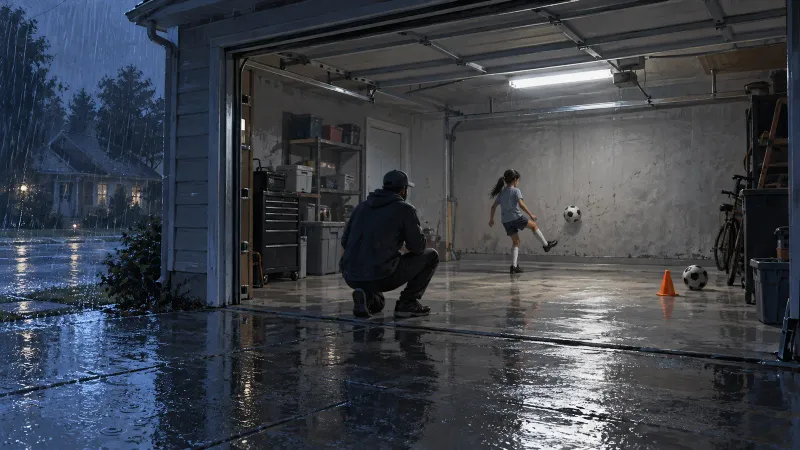
A private coach watches your kid take a touch, sees exactly what's wrong with it in real time, and fixes it before the next rep. If your kid's plant foot is pointing the wrong direction on every shot, or they're striking the ball with their toe instead of the laces, a coach catches that in the first few minutes and corrects it out loud, on the spot. No app, no video library, and no AI-written drill description can do that. It requires a trained adult physically present, watching your specific kid.
That live correction matters most for a narrow, identifiable problem: a shooting mechanic, a weak-foot habit, goalkeeper-specific footwork, a tactical read a coach wants to drill one-on-one. A coach can also push a kid who's clearly ahead of their peers in ways a generic daily assignment isn't built to do, since the session adjusts to that one kid's level in real time instead of following a plan built for a wide range of players.
What a private coach doesn't solve on its own is frequency. At $40 to $100 a session, almost no family is paying for daily, one-on-one coaching. The sessions that fit most budgets land once a week, every other week, or in short bursts tied to tryouts or a specific weakness. That's the gap a cheap daily habit is built to fill.
A private coach also makes the most sense for a kid who's already a standout and needs work that goes beyond what a team practice covers, things like advanced footwork, goalkeeper-specific training, or prep for a tryout where a specific weakness could cost a roster spot. A coach can design that session around one kid's actual gap instead of a plan built for a wide range of ages and levels. That specificity is worth paying for when the gap is real and the budget allows it.
What does Train Daily give your kid that private training doesn't?
Train Daily's whole design is built around the one thing private coaching struggles to deliver at scale: daily repetition. Open the app, do the day's assigned reps, watch the drill video, mark it complete. It takes a few minutes, it happens on your own driveway or backyard, and it doesn't require booking anyone's calendar or driving anywhere. For a household with more than one kid playing, the family plan puts every one of them on the same bill, each with their own age-matched reps and their own group on the leaderboard, for less than the cost of a single private lesson.
The habit mechanic matters more than any single drill. A streak, a point total, and a shield ladder that climbs from Infantil to Ronaldo give a kid a reason to open the app on a Tuesday when nobody's making them. A good private coach can build a relationship that motivates a kid too, but that motivation only shows up once a week. An app's version shows up every day, which is exactly the gap private lessons can't close on a typical family's budget.
One honest limit: Train Daily doesn't automatically count your kid's touches for you, since it doesn't rely on any special equipment, just a ball and a phone or tablet to watch the assigned drill on. If what you specifically want is a device that counts every touch without anyone marking it down by hand, there are smart soccer balls built for exactly that, running $40 to $100 for the ball plus another $10 to $25 a month for the app that reads its sensors. A family set on automatic counting should look at one of those instead.
Is a few minutes a day enough, or does a kid need more? That question comes up constantly from parents. My post on how much a kid should practice soccer at home walks through the 15-to-30-minute range I use with my own team and when it's worth going longer.
Is private soccer training worth it for your family?
It depends on what you're trying to fix. If your kid has one specific, identifiable problem, a weak first touch, a shooting mechanic that's been wrong for a season, goalkeeper distribution, book a short run of private sessions aimed at exactly that. A coach's real-time eye solves a narrow technical problem faster than any amount of unsupervised reps will.
If what you're after is general ball-mastery volume, touches, both feet, comfort under light pressure, the math tips hard toward daily reps instead. At $70 a session, a once-a-week private lesson gives your kid roughly one hour of attention a week. A few minutes of daily reps gives your kid more total practice time across a month for a fraction of the cost, even though no single rep gets a coach's direct feedback.
Plenty of families do both, and that combination is often the strongest option: private sessions for the specific fix, daily reps in between so the correction doesn't fade before the next lesson. The daily habit is also what determines whether private coaching even pays off. A kid who gets a technical fix in a Saturday lesson and doesn't touch the ball again until the following Saturday loses most of that correction to a week of not practicing it.
That daily habit depends entirely on whether your kid does the work without you standing over them every night. My post on getting your kid to practice soccer at home without nagging covers how to hand off a specific assignment so it doesn't turn into a nightly argument, whether that assignment comes from an app, a coach, or you.
What to do this week
- If your kid has one specific technical problem, book two or three private sessions aimed at that problem alone instead of an open-ended weekly commitment.
- If the goal is more total touches on the ball, price out a daily app against your realistic private-lesson budget before assuming a coach is the only option.
- Whichever you choose, decide how your kid will practice on the days nobody's watching, since that's what determines whether either investment holds up.
A daily habit is the cheapest way to add practice volume between anything else you're already paying for, coaching included. Train Daily runs about $12 to $25 a month depending on how many kids you sign up, with a 30-day free trial so you can see if the habit sticks before you're charged anything.